Start with a shape you can explain
A row, a ring, a cross, and a narrow column all use the board differently. When you recognize a possible recipe from the inventory, picture its outline first. This makes it easier to spot a missing corner or a handle that should extend down the center. A guess made from scattered ingredients gives you less to compare against the next round.
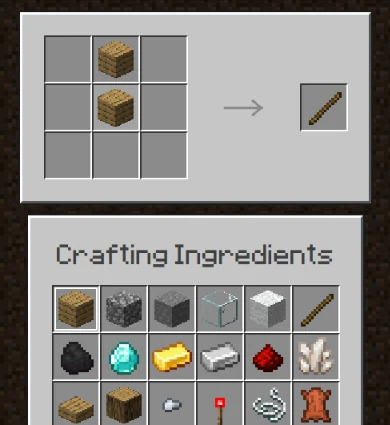
Try a wooden pickaxe when you want to test both the top row and the center column. Put three oak planks across the top, then stack two sticks in the middle and bottom squares of the center column. If the sticks turn green and all three planks turn gray, keep the handle in place and test a different head. Three cobblestone blocks in the same row make a stone pickaxe. That guess checks whether the secret shares the pickaxe shape while testing a new material.
Give each orange square a destination
Suppose A is green in the top center and B is orange in the middle left. Try a recipe that preserves A and puts B in a plausible new square. Think about which neighboring squares would need to be filled for that shape. Moving B to another random spot uses an attempt without testing much about the overall recipe.
Treat empty squares as part of the pattern
If a familiar recipe has an open center or a short bottom row, leave those squares open. Check empty corners before submitting, especially after swapping ingredients. On a small screen, confirm the piece landed where you intended before sending the guess.
The practice board checks the secret against a fixed grid position. For recipes one ingredient wide, use the center column and start at the top. For wider recipes, start at the upper left. If you have the right materials and mostly orange clues, compare the alignment of the whole recipe before trying different ingredients.